


The negative form of the auxiliary verbs is formed by adding not (or by reducing it to n't) to the verb
Examples: He is = He isn't. They are = They aren't. We can = We can't. I have got = I haven't got
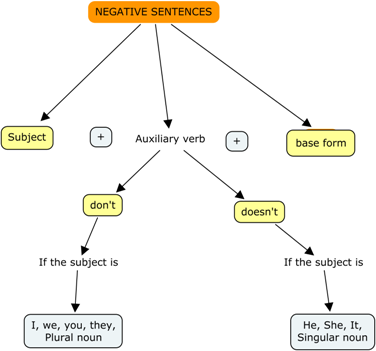
With the rest of the verbs, the negative form of the simple present is formed following this structure
SUBJECT + DON'T / DOESN'T + BASE FORM OF THE VERB
- Use don't if the subject is: I, We, You, They or a plural noun Example: They don't live in England
- Use doesn't if the subject is: He, She, It or a singular noun. Example: My son doesn't play the guitar
Close